


Why Choose an Emerald Cut Engagement Ring?
Emerald cut engagement rings offer a clean, timeless look rather than the intense sparkle of a round diamond. Long, step-cut facets create broad flashes of light and draw the eye to the stone's shape. For a classic style, start with a solitaire; for more detail, explore side stones or a geometric halo. Because this cut makes inclusions easier to see, inspect the center stone closely before you choose. The Gemological Institute of America offers a useful overview of diamond clarity characteristics that can help you understand what to look for in a step-cut stone.
We are Springer's Jewelers, Northern New England's oldest jeweler, with a history dating to 1870. We bring that experience in fine jewelry to helping you explore emerald cut engagement rings with confidence.
The Anatomy and Allure of the Emerald Cut
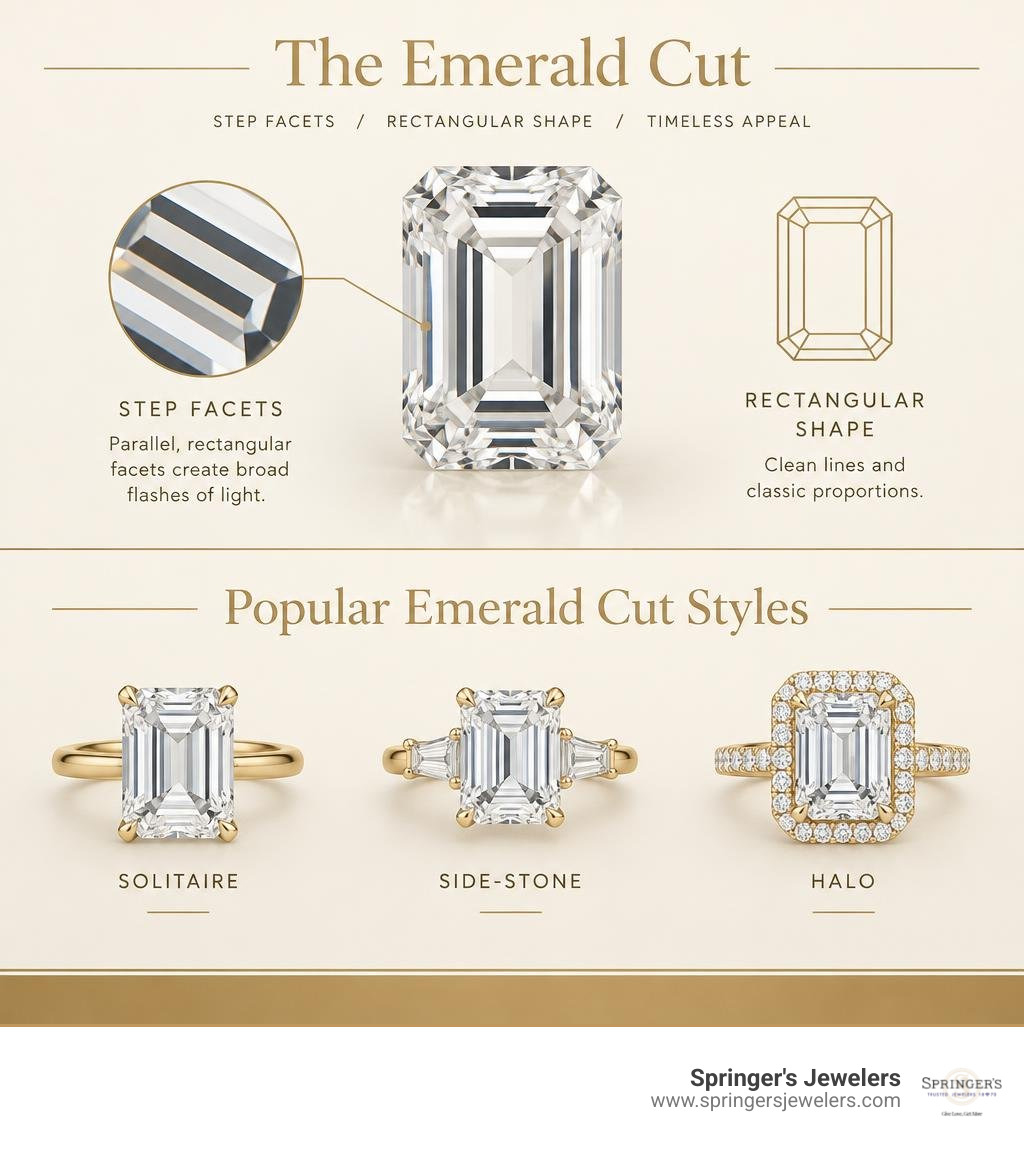
What makes the emerald cut instantly recognizable across a crowded room? Unlike round brilliant cuts—which rely on dozens of triangular and kite-shaped facets engineered to scatter light into dazzling fire—the emerald cut belongs to the step-cut family. Its optical architecture features parallel, rectangular facets arranged in neat tiers running down the stone's pavilion and crown.
The key anatomical hallmarks of the cut include:
- A Vast, Flat Table: The top flat surface of an emerald cut serves as a crystal-clear window directly into the heart of the gem.
- Truncated Corners: By lopping off sharp 90-degree corners into diagonal edges, cutters create a distinct octagonal footprint. This design protects the stone from chipping and simplifies setting into four-prong mountings.
- The Hall-of-Mirrors Effect: Because the facets run parallel along the straight sides, light reflects back in broad, rhythmic flashes of white and colored light rather than an unbroken glitter.
This geometric symmetry yields an understated elegance. Because diamond cutters retain a large surface area when shaping rough crystals into this profile, an emerald cut diamond often appears larger face-up than a round brilliant of the exact same carat weight. To appreciate this look firsthand, you can explore exceptional stones such as the Springer's Legacy 2.09ct Emerald Cut Diamond or browse our wider selection of curated emerald cut gems.
Popular Settings and Styles for Emerald Cut Engagement Rings
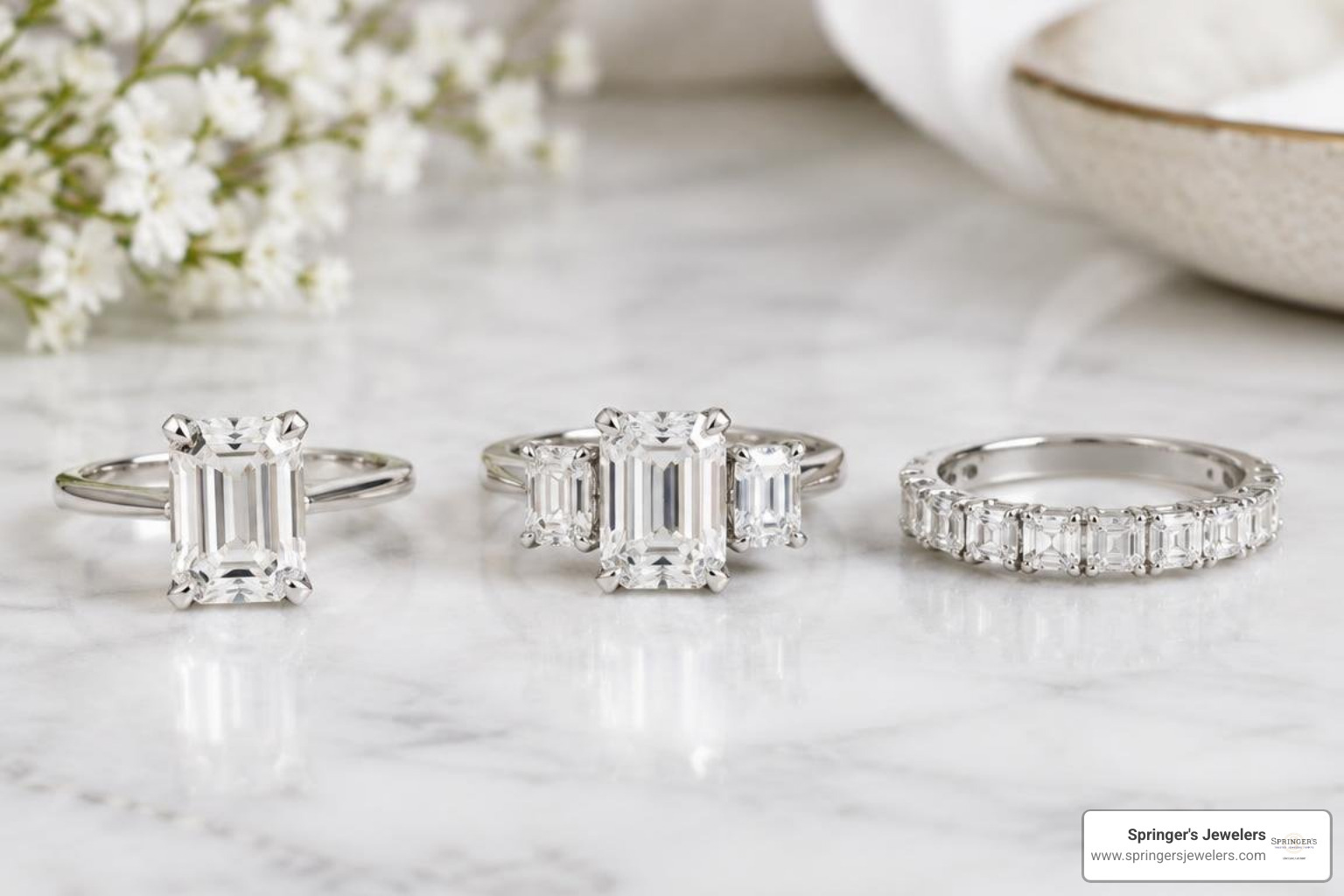
The architectural symmetry of an emerald cut pairs seamlessly with both sleek modern designs and intricate heritage mountings. Depending on your personal aesthetic, different settings elevate the stone's clean geometry in distinct ways.
Solitaire and Minimalist Emerald Cut Engagement Rings
For brides who favor clean lines, a solitaire setting places the gemstone front and center without distraction. Classic designs secure the truncated corners in a sturdy four-prong basket, perched atop a slender metal band.
Minimalist solitaires can also be set in an East-West orientation, where the gemstone is mounted horizontally across the finger rather than vertically. This modern twist adds a contemporary edge to an otherwise traditional cut. If you appreciate clean refinement, explore classic solitaire ring styles or pair your loose diamond with sleek platinum ring settings for unmatched strength and a cool, bright finish.
Three-Stone and Side-Stone Designs
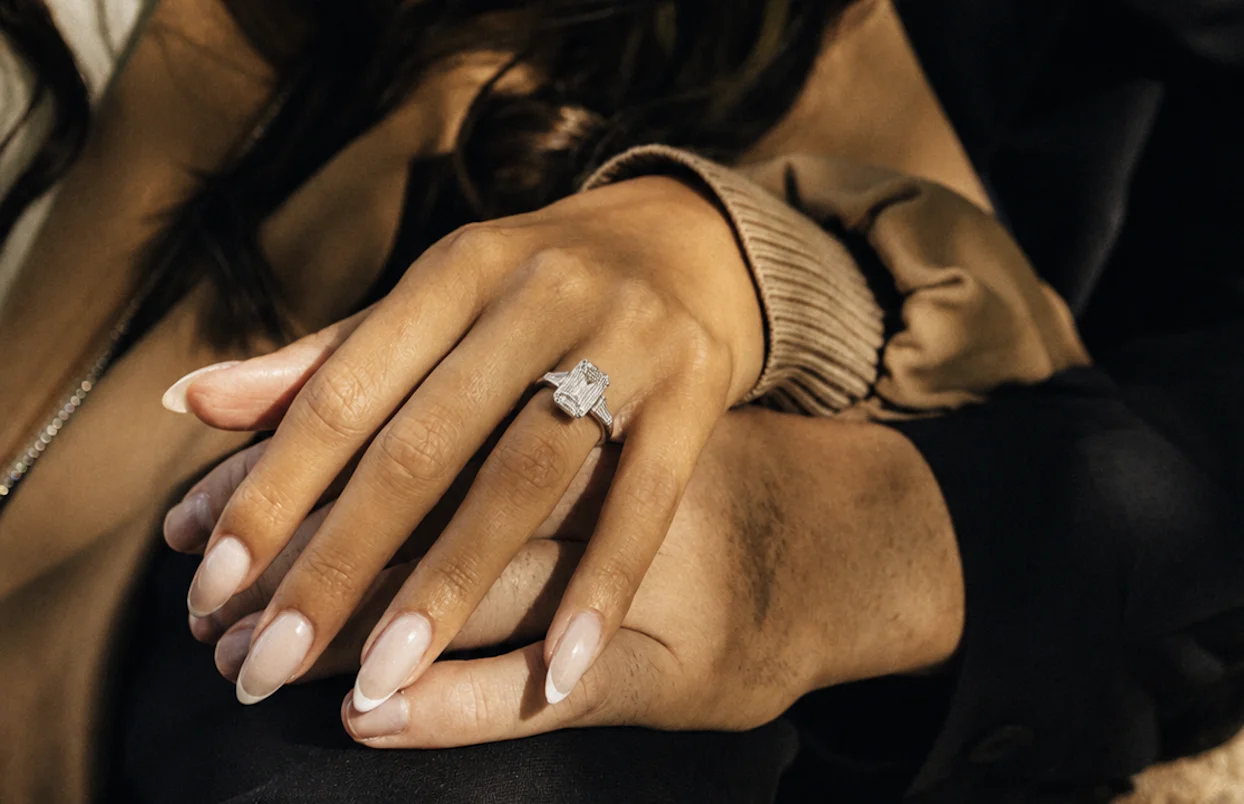
If you want additional finger coverage and balance, side-stone mountings create a seamless visual transition from the center gem down to the band.
Popular side-stone pairings include:
- Tapered Baguettes: A mid-century and vintage staple that complements the center gem’s step-cut pattern, gently guiding the eye outward.
- Trapezoids and Epaulettes: Broad-shouldered accents that add geometric weight and amplify the center stone's apparent width.
- Trilliant Cuts: Triangular brilliant accents that introduce a subtle hint of contrasting sparkle against the step-cut facets.
To see how balanced these silhouettes look on the hand, browse our side-stone ring mountings or consider heirloom options like estate three-stone platinum rings.
Vintage and Art Deco Emerald Cut Engagement Rings
The emerald cut flourished during the Art Deco era of the 1920s and 1930s, when fine jewelry mirrored the angular lines and bold geometry of contemporary architecture.
Vintage-inspired settings often feature milgrain-beaded edges, delicate filigree, or octagonal diamond halos that trace the gemstone's step-cut perimeter. Modern Art Deco-style mountings may also incorporate baguette-cut accent stones along the shank or combine mixed metal finishes. If you love antique character, explore our vintage-inspired emerald ring mountings or view the rich look of warm 18k yellow gold mountings.
Emerald Cut Diamonds vs. Natural Green Emeralds
While most couples today search for an emerald-cut diamond, the cutting style was originally developed hundreds of years ago specifically for natural green emeralds. Natural emeralds are brittle gemstones prone to natural internal fissures (known as jardin). Lapidaries devised the step cut with beveled corners to relieve internal structural stress during the cutting and setting process.
When deciding between a diamond center stone and a natural green emerald, consider how their physical properties differ:
| Feature | Emerald-Cut Diamond | Natural Green Emerald |
|---|---|---|
| Mohs Hardness | 10 (Extremely durable; highly scratch-resistant) | 7.5 – 8.0 (Relatively hard, but prone to chipping along inclusions) |
| Optical Character | Crisp flashes of light; optical brilliance | Deep, velvety green color saturation (jardin) |
| Everyday Wearability | Ideal for daily, lifetime wear with minimal risk | Requires cautious wear; protect from hard knocks and abrasions |
| Standard Treatments | None (standard for natural untreated diamonds) | Commonly enhanced with cedarwood oil, wax, or resin to improve clarity |
| Cleaning Needs | Steam, ultrasonic, or warm soapy water | Warm water and soft cloth only; never use ultrasonic cleaners |
If you desire maximum durability and daily wearability, fine emerald-cut diamond designs provide lasting resilience. If you fall in love with lush, vibrant color, our collection of fine green emerald jewelry delivers classic character. That natural emeralds treated with oils or resins require gentle hand cleaning to ensure their enhancements remain intact over time.
Essential Buying Considerations: Clarity, Color, and Metal Selection
Shopping for a step-cut stone requires a slightly different approach than shopping for a round brilliant. Because the large open table acts like a clear window into the diamond, inclusions and body color are more visible to the naked eye.
Prioritizing Clarity and Color
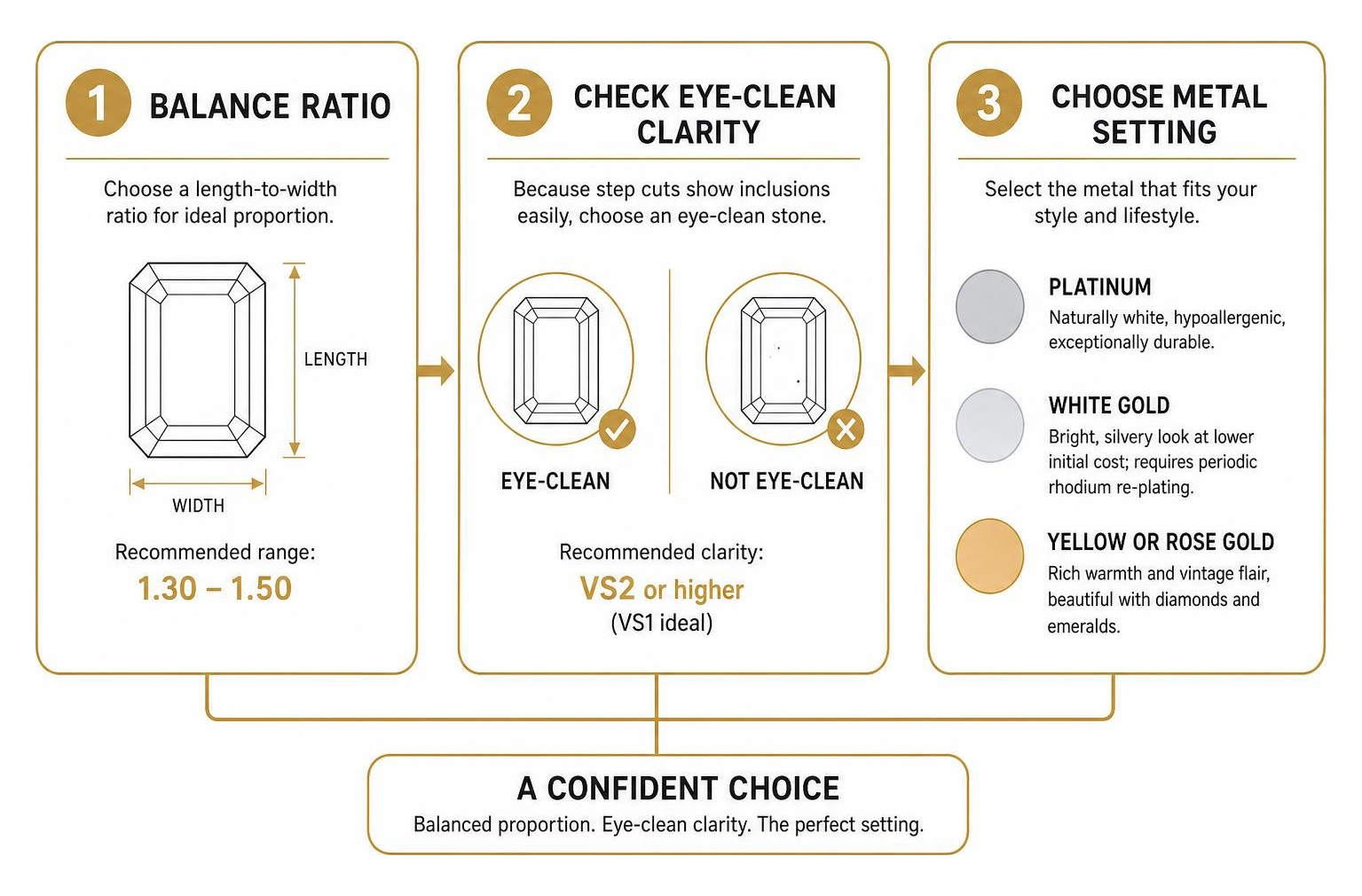
- Clarity: Brilliant cuts can easily mask minor internal flaws under a flurry of light facets. Emerald cuts, however, do not hide inclusions well. We recommend aiming for a clarity grade of VS2 or higher (with VS1 offering ideal peace of mind) to ensure the stone is completely eye-clean.
- Color: Because the broad facets retain and display body tone more noticeably than brilliant cuts, look for diamonds in the G to I range for an icy white face-up appearance in white gold or platinum. If you set your gem in yellow or rose gold, you can comfortably choose a J or K color grade, as the warm metal naturally complements warmer diamond tones.
Selecting Your Precious Metal
Your choice of metal impacts both the ring's overall aesthetic and its long-term maintenance requirements:
- Platinum: Naturally white, hypoallergenic, and exceptionally dense. It does not wear away over decades and provides superior security for delicate prongs.
- 14K or 18K White Gold: Offers a bright, silvery sheen at a lower initial cost than platinum. White gold is finished with a rhodium plating to achieve its mirror-bright finish, which will require periodic re-plating every few years.
- 18K Yellow or Rose Gold: Brings rich warmth and vintage flair, pairing beautifully with both diamonds and green emerald centerpieces.
When you are ready to evaluate loose diamonds and handcrafted emerald cut styles, visit our team at our regional New England bridal showrooms in Portsmouth, NH, or in Portland and Bath, ME. Our non-commissioned jewelry experts can guide you through side-by-side stone comparisons, explain our comprehensive warranty coverage, and help you find a piece that matches your budget and lifestyle.
Frequently Asked Questions About Emerald Cut Rings
What diamond clarity grade is best for an emerald cut ring?
The sweet spot for an emerald cut diamond is generally VS1 or VS2. Because step-cut facets provide a direct view into the center of the stone, inclusions located directly beneath the large table facet are more noticeable than in brilliant cuts. Choosing a VS2 stone that has been verified as "eye-clean" provides the best balance of visual purity and value.
How does the cost of an emerald cut compare to a round brilliant diamond?
Emerald cut diamonds generally cost 15% to 25% less per carat than round brilliant diamonds of equivalent carat weight, color, and clarity. The emerald cutting process retains a larger percentage of the original rough diamond crystal, resulting in less rough gemstone waste during manufacturing and direct savings for the buyer.
How should I clean and maintain an emerald cut engagement ring?
For diamond rings, soak the piece in warm water with mild liquid dish soap, then gently scrub around and beneath the stone using a soft-bristled toothbrush. Rinse thoroughly with clean warm water and pat dry with a lint-free cloth.
If your ring features a natural green emerald, never place it in an ultrasonic cleaner or expose it to boiling water or harsh household chemicals, as these can strip the natural oils and resin enhancements from the gemstone. Have your prongs and settings professionally inspected at a trusted jeweler once or twice a year to ensure your center stone remains secure.
Conclusion
With its geometric lines, elongated silhouette, and sophisticated step-cut faceting, an emerald cut engagement ring offers an enduring alternative to traditional round diamonds. Whether you choose a classic solitaire mounting, an Art Deco-inspired three-stone setting, or a vivid natural green centerpiece, this shape remains one of the most distinguished choices in fine jewelry.
At Springer's Jewelers, our family has guided New England couples through life's most meaningful milestones since 1870. We invite you to explore our extensive online inventory or stop by our showrooms in Portland and Bath, Maine, or Portsmouth, New Hampshire, to view our full collection of engagement rings in person.